
WORLD:#
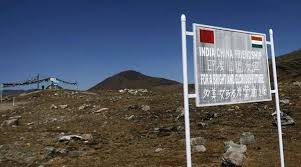
The Chinese have always been an expansionist civilisation. Couched in a language of culture and mutual coexistence, their designs on neighbouring territories have generally been tempered through dialogue, defence deals or concessions by neighbouring polities. Nothing exemplifies this fact more than the refusal of three successive Chinese governments in delineating or demarcating the boundary with either Tibet or India till the former was subsumed and the latter’s psyche scarred. The last residue of the Qing dynasty was wiped out in the 1911 revolution when China was established as a republic. The republic was again overthrown in 1949 by the Chinese Communist Party.
British archival records, many declassified, are awash with innumerable attempts made by Imperial Britain to formally formulate a boundary with China. Yet, all three regimes were united in their refusal to accept a formal limiting of China’s territorial expanse and kept their response ambiguous. Even during the Simla Convention of 1913-14, when the Republic was ascendant in China, there was a vehement refusal to recognise any demarcation of boundaries between Tibet and China, marking a continuation of expansive territoriality that was the hallmark of the Qing dynasty. Since then, a number of alleged ancient maps, ambiguous treaties and declarations have marked Communist China’s attempts to keep on increasing its territorial reach.
